
الإعتراض:
سَمِعْتُمْ أَنِّي قُلْتُ لَكُمْ: أَنَا أَذْهَبُ ثُمَّ آتِي إِلَيْكُمْ. لَوْ كُنْتُمْ تُحِبُّونَنِي لَكُنْتُمْ تَفْرَحُونَ لأَنِّي قُلْتُ: أَمْضِي إِلَى الآبِ، لأَنَّ أَبِي أَعْظَمُ مِنِّي.
يوحنا ١٤: ٢٨
ويقول المُعترض إذا كان الآب أعظم من المسيح فالمسيح ليس الله.
الرد:
أوّلاً: Law of context
١- ألوهية المسيح:
يوحنا ١٤: ٩
اَلَّذِي رَآنِي فَقَدْ رَأَى الآبَ
يوحنا ١٤: ١٠
أَنِّي أَنَا فِي الآبِ وَالآبَ فِيَّ
٢- صلب المسيح وقيامته وصعوده:
يوحنا ١٤: ٢٨
أَنَا أَذْهَبُ ثُمَّ آتِي إِلَيْكُمْ.
إذاً من سياق النص المسيح يتكلم عن أنه والآب واحد، ولكن قوله “الآب أعظم مني” في فترة التجسد بعد الإشارة إلى موته “أنا أذهب”.
الآب في مجده أعظم من الإبن في فترة التجسد فترة إخلاء الذات حيث سيعاني الصلب والموت.
ثانياً: مساواة الآب والإبن
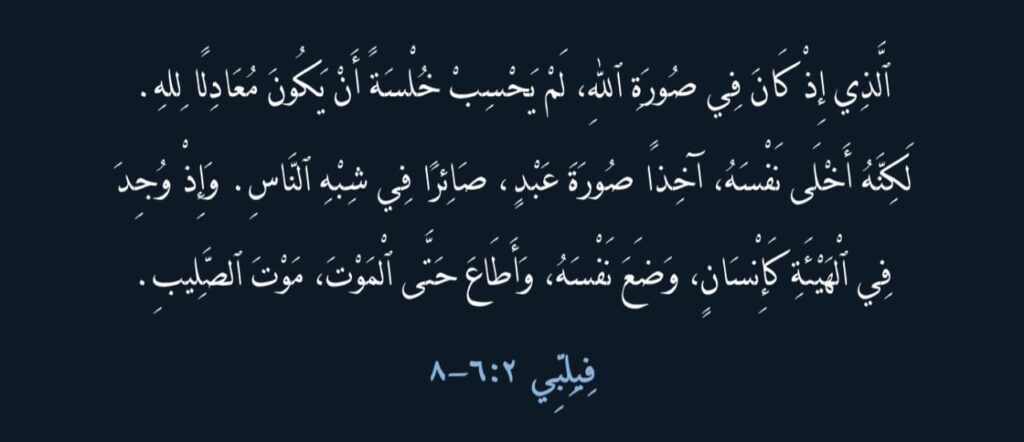
الَّذِي إِذْ كَانَ فِي صُورَةِ اللهِ، لَمْ يَحْسِبْ خُلْسَةً أَنْ يَكُونَ مُعَادِلًا للهِ. لكِنَّهُ أَخْلَى نَفْسَهُ، آخِذًا صُورَةَ عَبْدٍ، صَائِرًا فِي شِبْهِ النَّاسِ. وَإِذْ وُجِدَ فِي الْهَيْئَةِ كَإِنْسَانٍ، وَضَعَ نَفْسَهُ وَأَطَاعَ حَتَّى الْمَوْتَ مَوْتَ الصَّلِيبِ.
فيليبي ٢: ٦-٨
كُلُّ مَا لِلآبِ هُوَ لِي. لِهَذَا قُلْتُ إِنَّهُ يَأْخُذُ مِمَّا لِي وَيُخْبِرُكُمْ. يوحنا ١٦: ١٥

لِكَيْ يُكْرِمَ الْجَمِيعُ الابْنَ كَمَا يُكْرِمُونَ الآبَ. مَنْ لَا يُكْرِمُ الابْنَ لَا يُكْرِمُ الآبَ الَّذِي أَرْسَلَهُ
يوحنا ٥: ٢٣

ثالثاً: الآباء القديسين
أثاناسيوس في
Discourse 1 Against the Arians 58. 59.
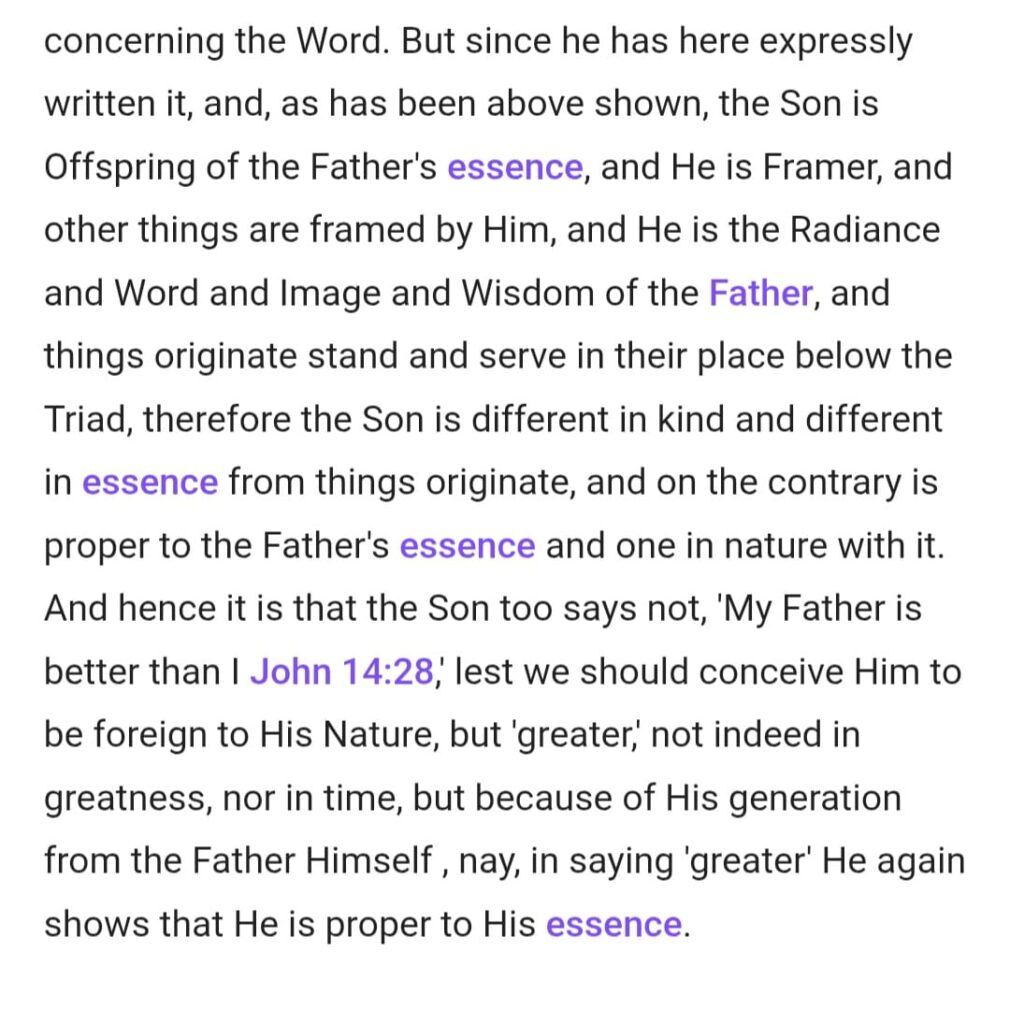
But since he has here expressly written it, and, as has been above shown, the Son is Offspring of the Father’s essence, and He is Framer, and other things are framed by Him, and He is the Radiance and Word and Image and Wisdom of the Father, and things originate stand and serve in their place below the Triad, therefore the Son is different in kind and different in essence from things originate, and on the contrary is proper to the Father’s essence and one in nature with it. And hence it is that the Son too says not, ‘My Father is better than I John 14:28,’ lest we should conceive Him to be foreign to His Nature, but ‘greater,’ not indeed in greatness, nor in time, but because of His generation from the Father Himself , nay, in saying ‘greater’ He again shows that He is proper to His essence.
59.And the Apostle’s own reason for saying, ‘so much better than the Angels,’ was not any wish in the first instance to compare the essence of the Word to things originate (for He cannot be compared, rather they are incommeasurable), but regarding the Word’s visitation in the flesh, and the Economy which He then sustained, he wished to show that He was not like those who had gone before Him; so that, as much as He excelled in nature those who were sent afore by Him, by so much also the grace which came from and through Him was better than the ministry through Angels. For it is the function of servants, to demand the fruits and no more; but of the Son and Master to forgive the debts and to transfer the vineyard.
وترجمته:
لكن بما أنه قد كتب ذلك صراحةً هنا، وكما سبق بيانه، فإن الابن هو نسل جوهر الآب، وهو الخالق، وبه تُخلق الأشياء الأخرى، وهو إشعاع الآب وكلمته وصورته وحكمته، والأشياء الناشئة قائمة وتخدم في مكانها أسفل الثالوث، لذلك فإن الابن يختلف في النوع والجوهر عن الأشياء الناشئة، بل هو على العكس من ذلك، فهو خاص بجوهر الآب ومتحد معه في الطبيعة. ومن هنا أيضاً أن الابن لا يقول: «أبي أفضل مني» (يوحنا 14: 28)، لئلا نتصوره غريباً عن طبيعته، بل «أعظم»، ليس في عظمته ولا في زمانه، بل بسبب ولادته من الآب نفسه، بل بقوله «أعظم» يُظهر مرة أخرى أنه خاص بجوهره. 59. (7). ولم يكن سبب قول الرسول: «أفضل بكثير من الملائكة»، رغبةً منه في المقام الأول في مقارنة جوهر الكلمة بالأشياء المادية (فهو لا يُقارن، بل هي لا تُقاس)، وإنما أراد، فيما يتعلق بزيارة الكلمة في الجسد، والتدبير الذي قام به آنذاك، أن يُبين أنه لم يكن مثل الذين سبقوه؛ فكما فاق في طبيعته من أرسلهم من قبله، كذلك كانت النعمة التي أتت منه ومن خلاله أفضل من الخدمة بواسطة الملائكة. فوظيفة الخدام أن يطلبوا الثمار لا أكثر، أما وظيفة الابن والسيد فهي أن يغفر الديون وينقل الكرمة.
المصدر:
https://www.newadvent.org/fathers/28161.htm
القدس أغسطينوس في
Tractate 70
John 14: 27-28
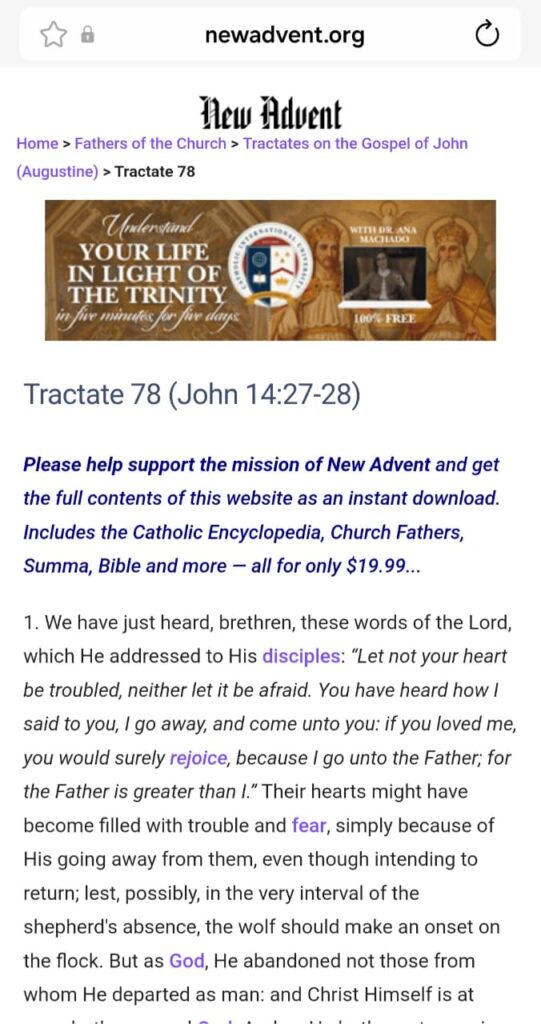
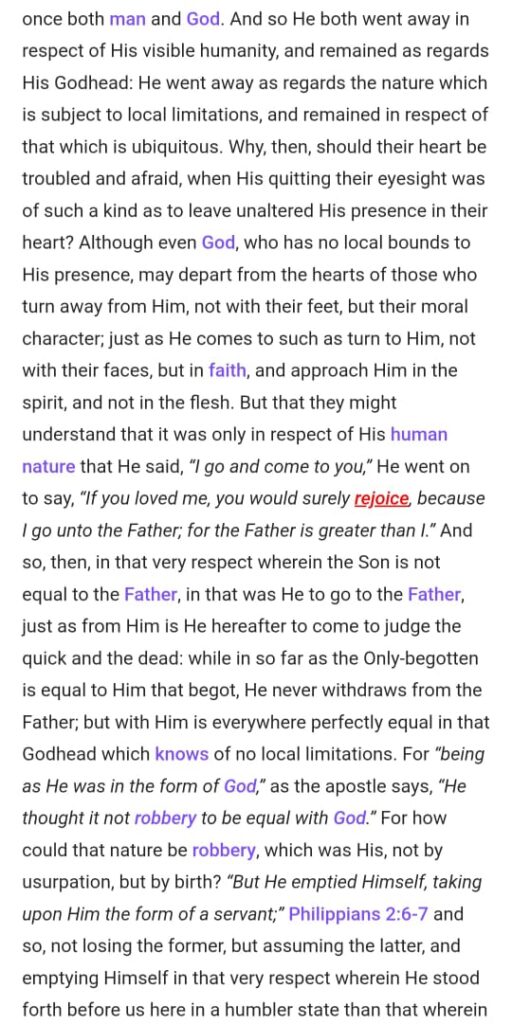
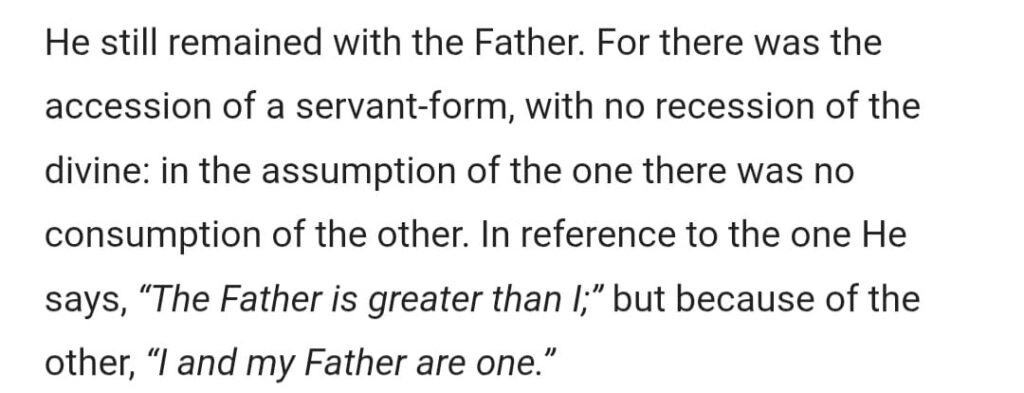
We have just heard, brethren, these words of the Lord, which He addressed to His disciples: Let not your heart be troubled, neither let it be afraid. You have heard how I said to you, I go away, and come unto you: if you loved me, you would surely rejoice, because I go unto the Father; for the Father is greater than I. Their hearts might have become filled with trouble and fear, simply because of His going away from them, even though intending to return; lest, possibly, in the very interval of the shepherd’s absence, the wolf should make an onset on the flock. But as God, He abandoned not those from whom He departed as man: and Christ Himself is at once both man and God. And so He both went away in respect of His visible humanity, and remained as regards His Godhead: He went away as regards the nature which is subject to local limitations, and remained in respect of that which is ubiquitous. Why, then, should their heart be troubled and afraid, when His quitting their eyesight was of such a kind as to leave unaltered His presence in their heart? Although even God, who has no local bounds to His presence, may depart from the hearts of those who turn away from Him, not with their feet, but their moral character; just as He comes to such as turn to Him, not with their faces, but in faith, and approach Him in the spirit, and not in the flesh. But that they might understand that it was only in respect of His human nature that He said, I go and come to you, He went on to say, If you loved me, you would surely rejoice, because I go unto the Father; for the Father is greater than I. And so, then, in that very respect wherein the Son is not equal to the Father, in that was He to go to the Father, just as from Him is He hereafter to come to judge the quick and the dead: while in so far as the Only-begotten is equal to Him that begot, He never withdraws from the Father; but with Him is everywhere perfectly equal in that Godhead which knows of no local limitations. For being as He was in the form of God, as the apostle says, He thought it not robbery to be equal with God. For how could that nature be robbery, which was His, not by usurpation, but by birth? But He emptied Himself, taking upon Him the form of a servant; Philippians 2:6-7 and so, not losing the former, but assuming the latter, and emptying Himself in that very respect wherein He stood forth before us here in a humbler state than that wherein He still remained with the Father. For there was the accession of a servant-form, with no recession of the divine: in the assumption of the one there was no consumption of the other. In reference to the one He says, The Father is greater than I; but because of the other, I and my Father are one.
ترجمته:
أيها الإخوة، لقد سمعنا للتو كلمات الرب هذه التي وجهها إلى تلاميذه: «لا تضطرب قلوبكم ولا ترهب. لقد سمعتم كيف قلت لكم: إني ذاهب لأعود إليكم. لو كنتم تحبونني حقًا لفرحتم لأني ذاهب إلى الآب، لأن الآب أعظم مني». ربما امتلأت قلوبهم بالقلق والخوف لمجرد ابتعاده عنهم، حتى وإن كان ينوي العودة؛ خشية أن ينقض الذئب على القطيع في غياب الراعي. لكنه، بصفته إلهًا، لم يتخلَّ عن الذين فارقهم كإنسان: والمسيح نفسه إنسان وإله في آن واحد. وهكذا رحل من حيث بشريته الظاهرة، وبقي من حيث ألوهيته: رحل من حيث طبيعته التي تخضع للقيود المحلية، وبقي من حيث طبيعته الشاملة. فلماذا إذًا يضطرب قلبهم ويخاف، وقد كان غيابه عن أنظارهم من النوع الذي يُبقي حضوره في قلوبهم دون تغيير؟ مع أن الله، الذي لا حدود لحضوره، قد يغيب عن قلوب من ينصرفون عنه، لا بأقدامهم، بل بسلوكهم؛ كما أنه يأتي إلى من يتوجهون إليه، لا بوجوههم، بل بالإيمان، ويقتربون منه بالروح لا بالجسد. ولكن لكي يفهموا أنه قال، من منطلق طبيعته البشرية، “أنا ذاهب وإليكم آتي”، تابع قائلًا: “لو كنتم تحبونني لفرحتم، لأني ذاهب إلى الآب، فالآب أعظم مني”. وهكذا، ففي هذا الجانب الذي لا يُساوي فيه الابن الآب، أي في ذهابه إلى الآب، كما أنه سيأتي منه فيما بعد ليدين الأحياء والأموات؛ بينما في كونه مساويًا للوالد، لا ينفصل الابن عن الآب أبدًا. لكنّه متساوٍ معه تمامًا في كل مكان في تلك الألوهية التي لا تعرف حدودًا محلية. ولأنه كان على صورته الإلهية، كما يقول الرسول، لم يرَ في مساواته لله غبنًا. فكيف تكون تلك الطبيعة غبنًا، وهي طبيعته لا بالاغتصاب، بل بالولادة؟ لكنه أخلى نفسه، متخذًا صورة عبد (فيلبي 2: 6-7)، وهكذا، لم يفقد الأولى، بل اتخذ الثانية، وأخلى نفسه في ذلك الجانب الذي ظهر به أمامنا هنا في حالة أكثر تواضعًا من تلك التي كان عليها مع الآب. فقد كان هناك صعود لصورة العبد، دون تراجع عن الألوهية: ففي اتخاذ الأولى لم يمت الأخرى. وفي إشارة إلى الأولى يقول: «الآب أعظم مني»، ولكن بسبب الثانية، أنا والآب واحد.
المصدر:
https://www.newadvent.org/fathers/1701078.htm
القديس يوحنا ذهبي الفم في
Homily 75 on the Gospel of John
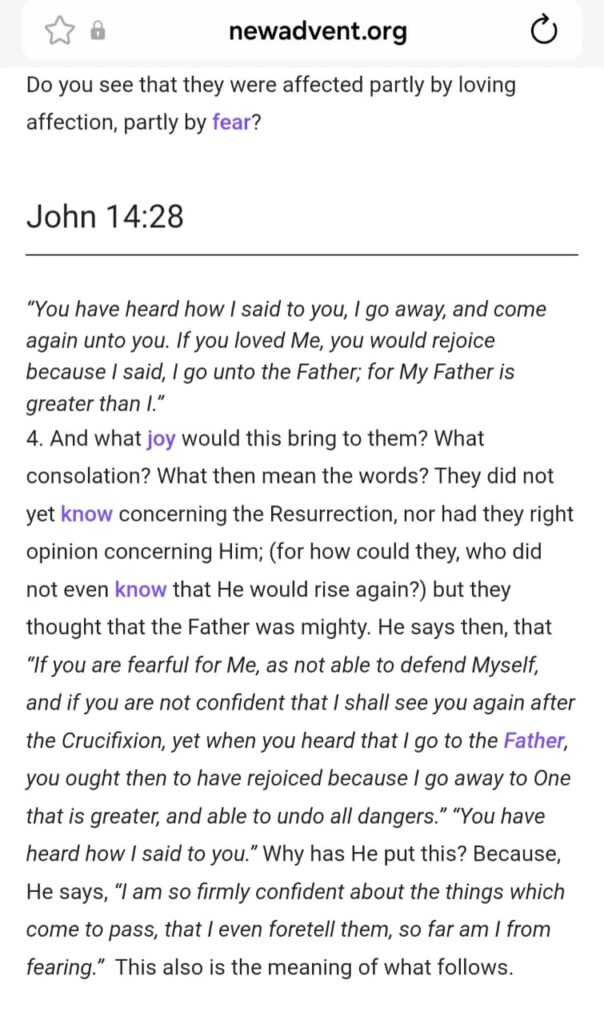
You have heard how I said to you, I go away, and come again unto you. If you loved Me, you would rejoice because I said, I go unto the Father; for My Father is greater than I.
And what joy would this bring to them? What consolation? What then mean the words? They did not yet know concerning the Resurrection, nor had they right opinion concerning Him; (for how could they, who did not even know that He would rise again?) but they thought that the Father was mighty. He says then, that If you are fearful for Me, as not able to defend Myself, and if you are not confident that I shall see you again after the Crucifixion, yet when you heard that I go to the Father, you ought then to have rejoiced because I go away to One that is greater, and able to undo all dangers. You have heard how I said to you. Why has He put this? Because, He says, I am so firmly confident about the things which come to pass, that I even foretell them, so far am I from fearing. This also is the meaning of what follows.
ترجمته:
لقد سمعتم كيف قلت لكم: إني ذاهب، ثم أعود إليكم. لو كنتم تحبونني، لفرحتم لأني قلت: إني ذاهب إلى الآب، لأن أبي أعظم مني.
فأي فرحة كانت ستجلبها لهم هذه الكلمات؟ أي عزاء؟ ما معنى هذه الكلمات إذن؟ لم يكونوا يعرفون شيئًا عن القيامة، ولم تكن لديهم فكرة صحيحة عنه (فكيف لهم ذلك وهم لا يعلمون حتى أنه سيقوم؟)، لكنهم ظنوا أن الآب قدير. يقول إذًا: إن كنتم خائفين عليّ، لعجزي عن الدفاع عن نفسي، وإن لم تكونوا واثقين من أنني سأراكم ثانية بعد الصلب، ولكن لما سمعتم أني ذاهب إلى الآب، كان ينبغي لكم أن تفرحوا لأني ذاهب إلى من هو أعظم، وقادر على إزالة كل المخاطر. لقد سمعتم كيف قلت لكم. لماذا قال هذا؟ لأنه، كما يقول، أنا على ثقة تامة بالأمور التي ستحدث، حتى أنني أتنبأ بها، فلا خوف عليّ. وهذا أيضاً هو معنى ما يلي.
المصدر:
https://www.newadvent.org/fathers/240175.htm
خلاصة:
عبارة «الآب أعظم مني» لا تتكلم عن جوهر المسيح ولا تنفي ألوهيته، بل قيلت في سياق التجسد والذهاب إلى الصليب ثم العودة إلى الآب. لذلك أعلن المسيح في السياق نفسه وحدته مع الآب، كما أكد الكتاب مساواته لله ووجوب إكرامه كما يُكرَم الآب.
ولهذا فهم الآباء القديسون الآية على أنها تتعلق باتضاع الابن المتجسد أو بعلاقته البنوية بالآب، لا بتفاوت في الألوهية. فالمسيح من جهة ناسوته يقول: «الآب أعظم مني»، ومن جهة لاهوته يقول: «أنا والآب واحد». وبالتالي فالآية لا تنفي ألوهية المسيح بل تؤكد حقيقة التجسد.