
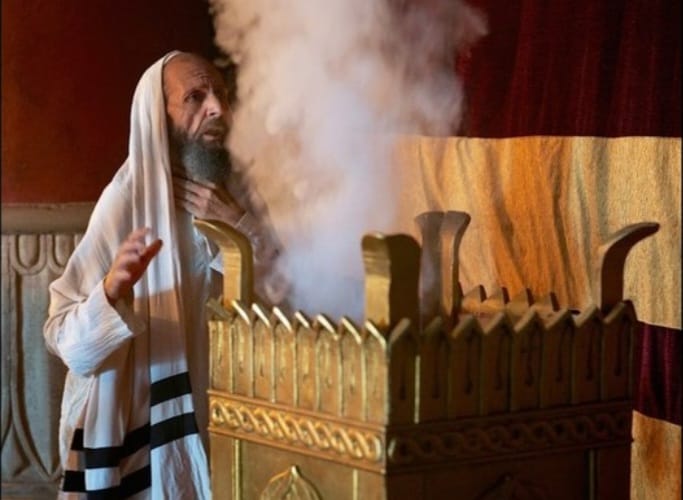
الإعتراض:
وَتُوَكِّلُ هَارُونَ وَبَنِيهِ فَيَحْرُسُونَ كَهَنُوتَهُمْ، وَالأَجْنَبِيُّ الَّذِي يَقْتَرِبُ يُقْتَلُ. (العدد 3: 10)
ويقول المُعترض هذه قسوة.
الرد:
أوّلاً: تحذير من كسر وصية الرب وليس تحريض على القتل
ما ورد في هذه الآية ليس تحريض على القتل بل هو تحذير من عدالة سماوية ، فكل من تعدّى على الكهنوت في الكتاب المقدس لم يتعرض للقتل من قبل البشر بل إلى عقوبة سماوية من خلال حجب الرب الإله وجهه عنه وبالتالي رفع يد الحماية، أعطي بعض الأمثلة من الكتاب المقدس:
١- (2 أخبار الأيام 26: 16-21)
عزّيا حاول أن يوقد على مذبح البخور فحذروه الكهنة (لم يقتلوه) فأصيب بمرض البرص
٢- (1 صموئيل 13: 8-14).
شاول قدم المحرقة للرب ، فمملكته لا تقوم
٣- (1 ملوك 13: 1-4).
الملك يربعام أنشأ كهنوتاً بديلاً وحاول ان يوقد على المذبح فكانت النتيجة انشقاق المذبح
٤- (سفر العدد 16: 1-35)
قورح وجماعته ٢٥٠ شخص تمردوا على الرب الإله وموسى وهارون يريدون وظيفة الكهنوت وهلكوا بزلزال والنار
تظهر العدالة الإلهية من خلال رموز ودلالات روحية، مثل عدم قبول الذبيحة أو انشقاق المذبح، أو عدم ثبات الملك أو سقوط شرعيته، وليس بالضرورة عبر المرض أو الهلاك الجسدي، والأهم ليس بالتحريض على القتل.
ثانياً: تفسير اليهود
جاء في التلمود Sanhedrin 83b:4:
The baraita continues: The punishment for a non-priest who performed the Temple service is death at the hand of Heaven, as it is written: “You and your sons with you shall safeguard your priesthood with regard to every matter of the altar…and any non-priest who approaches shall die” (Numbers 18:7).
وترجمته:
وتتابع البرايتا: إن عقوبة غير الكاهن الذي يؤدي خدمة الهيكل هي الموت على يد السماء، كما هو مكتوب: “أنت وأبناؤك معك تحفظون كهنوتكم فيما يتعلق بكل ما يخص المذبح… وكل غير كاهن يقترب يموت” (العدد 18:7).
المصدر:
https://www.sefaria.org/Numbers.3.10?lang=bi&with=Sanhedrin
وجاء في Ein Yaakov (Glick Edition), Shabbat 2:13
Our Rabbis taught: A man shall always be as patient as Hillel and not as excitable as Shammai. Once it happened that two men laid a wager with one another (Fol. 31a) that whichever would succeed in putting Hillel out of temper should receive four hundred zouzim “I shall go and put him out of temper.” said one. It was on Friday afternoon, and Hillel was washing Himself, when the man passed by the door of his house, shouting: “Does Hillel live here? Does Hillel live here?” Hillel wrapped his mantle round him and went out to meet him. “My son,” he said to him, “what do you wish?” “I have a question to ask,” was the reply. “Ask, my son, ask,”‘ said Hillel. “Why are the heads of the Babylonians round?” the man asked. “A great question hast thou asked, my son. Because they have no trained midwives.” The man went away and after a while, returned calling out, “Does Hillel live here? Does Hillel live here?” Hillel again wrapped his mantle round him and went out to meet him. “My son,” he said, “what do you wish?” “A great question have I to ask,” he said. “Ask, my son, ask,” said Hillel. “Why are the, people of Tarmod (Palmyra) weak-eyed?” asked he. Hillel said: “Thou hast asked a great question. Because they live in a sandy country.” The man went away, and after waiting a while, came back shouting: “Does Hillel live here? Does Hillel live here?” Hillel wrapped his mantle round him and went out to meet him. “My son,” he said, “what do you wish?” “I have a question to ask.” said the man. “Ask. my son, ask.,” said Hillel. “Why are the feet of the Africans so broad?” “Thou hast asked a great question! Because they live
in marshy land.” “I have many more questions to ask,” said the man, “but I am afraid lest I shall make thee angry.” Hillel, drawing his mantle around him, sat down before the man, saying to him: “All the questions thou hast to ask, please ask.” “Art thou Hillel,” said he., “who is called Prince of Israel?” “Yes,” answered Hillel. “If thou art the one, then I pray there may not be many more in Israel like thee.” “Why is that, my son?” asked Hillel. “Because,” said the man, “I have lost four hundred zouzim through thee.” “Be cautious with thy temper,” said Hillel. “Better is it that thou shouldst lose four hundred zouzim, and four hundred more zouzim, but that Hillel should not become excited.” Our Rabbis taught that a heathen once came before Shammai and said: “How many Torahs have you?” Shammai replied: “We have two; the written Torah and the oral Torah.” The heathen then said to him: “In the written Torah I believe thee, but in the oral Torah I do not believe thee. Make me, therefore, a proselyte on condition that you teach me the written Torah only.” Shammai rebuked him sharply and sent him away angry. The heathen then appeared before Hillel, and the latter made him a proselyte. On the first day, Hillel taught him the Aleph, Beth, Gimel, Daleth. On the morrow, Hillel reversed the order of these letters (beginning with the last letter). “Thou didst not teach me so yesterday,” said the proselyte to him. “True,” said Hillel. “Dost thou not rely upon me? Why then dost thou not rely upon me with the oral Torah?” On another occasion it happened that a heathen appeared before Shammai and said: “Convert me to Judaism but on condition that thou teachest me the whole Torah, while I am standing upon one leg.” Shammai drove him off with the builder’s cubit (measure) which he held in his hand. Then the heathen appeared before Hillel, and he made him a proselyte, and said unto him: “That which is hateful to thee do not do unto thy neighbor, this is the whole Torah, and the rest is merely its commentary.” Again it happened that while a heathen passed by the rear of a synagogue he heard the voice of a scribe who was saying, And these are the garments which they shall make; a breast-plate and an Ephod and a robe. (Ex. 28, 4). For whom are these?” asked the heathen. “For the High Priest,” replied the scribe.” So the heathen said to himself: “I shall go and become a proselyte on condition that I be made a High Priest.” He came before Shammai and said to him: “Make me a proselyte upon condition that you make me a High Priest.” Shammai drove him away with the builders cubit which he held in his hand. The heathen then came before Hillel; the latter made him a proselyte, and said to him: “Is it possible for one to be made a king unless he knows the court ceremonials? Go, study first the court ceremonials.” The proselyte thereupon went and learned the Torah. When he came to the passage (Num. 3, 10.) And the stranger that cometh nigh shall be put to death, he asked: “For whom is that passage meant?” “Even for David, the King of Israel,” Hillel replied. Then the proselyte came to the following conclusion: “If for Israelites, who are called the sons of God and who on account of God’s love shown to them, were called (Ex. 4. 22), My son, my first-born, Israel, a warning is written, And the stranger that cometh nigh shall be put to death, how much more does this apply to the mere proselyte who came with but his staff and traveling bag?” He went to Shammai and said to him: “Am I then eligible to be a High Priest? Behold! It is written in the Torah, And the stranger
that cometh nigh shall be put to death.” He then went to Hillel and said to him: “O thou forbearing Hillel, may blessings rest upon thy head, because thou hast brought me under the wings of the Shechina.” Later all the three proselytes happened to meet in one place and they said: “Oh, the impatience of Shammai could drive us out of this world, but the patience of Hillel brought us under the wings of the Shechina!”
وترجمته:
علّم حاخاماتنا: يجب على الإنسان دائمًا أن يكون صبورًا مثل هليل، وألا يكون سريع الغضب مثل شماي.
حدث مرة أن رجلين راهنا أحدهما الآخر (ورقة 31أ) أن من ينجح في إغضاب هليل ينال أربعمئة زوزيم. فقال أحدهما: “أنا سأذهب وأغضبه.” وكان ذلك يوم الجمعة بعد الظهر، وكان هليل يغتسل، فمرّ الرجل بجانب باب بيته وهو يصرخ: “هل يسكن هليل هنا؟ هل يسكن هليل هنا؟”
فلفّ هليل رداءه حوله وخرج للقائه. فقال له: “يا ابني، ماذا تريد؟”
قال: “لديّ سؤال.”
قال: “اسأل يا ابني، اسأل.”
قال: “لماذا رؤوس البابليين مستديرة؟”
قال: “سؤال عظيم سألت يا ابني. لأنهم لا يملكون قابلات ماهرات.”
فمضى الرجل، وبعد قليل عاد وهو يصرخ: “هل يسكن هليل هنا؟ هل يسكن هليل هنا؟”
فلفّ هليل رداءه وخرج إليه. قال: “يا ابني، ماذا تريد؟”
قال: “لديّ سؤال عظيم.”
قال: “اسأل يا ابني، اسأل.”
قال: “لماذا عيون أهل تدمر (تدمر/تدمر = بالميرا) ضعيفة؟”
قال: “سؤال عظيم سألت. لأنهم يعيشون في أرض رملية.”
فمضى الرجل، وبعد انتظار قليل عاد وهو يصرخ: “هل يسكن هليل هنا؟ هل يسكن هليل هنا؟”
فلفّ هليل رداءه وخرج إليه. قال: “يا ابني، ماذا تريد؟”
قال: “لديّ سؤال.”
قال: “اسأل يا ابني، اسأل.”
قال: “لماذا أقدام الأفارقة عريضة جدًا؟”
قال: “سؤال عظيم سألت! لأنهم يعيشون في أرض مستنقعية.”
قال الرجل: “لديّ أسئلة كثيرة أخرى، لكني أخشى أن أغضبك.”
فلفّ هليل رداءه وجلس أمامه وقال: “كل الأسئلة التي لديك، اسألها.”
قال: “أأنت هليل الذي يُدعى رئيس إسرائيل؟”
قال: “نعم.”
قال: “إن كنت أنت، فليت لا يكون في إسرائيل كثيرون مثلك.”
قال: “ولِمَ يا ابني؟”
قال: “لأنني خسرت بسببك أربعمئة زوزيم.”
قال: “احذر غضبك. خير لك أن تخسر أربعمئة زوزيم، بل وأربعمئة أخرى، من أن يغضب هليل.”
علّم حاخاماتنا: جاء وثني إلى شماي وقال له: “كم توراة لديكم؟”
قال له: “لدينا اثنتان: التوراة المكتوبة والتوراة الشفوية.”
قال له الوثني: “أما المكتوبة فأصدقك فيها، وأما الشفوية فلا أؤمن بها. فحوّلني إلى يهودي بشرط أن تعلّمني المكتوبة فقط.”
فانتهره شماي بشدة وطرده غاضبًا.
ثم جاء الوثني إلى هليل، فقبله.
في اليوم الأول علّمه: ألف، باء، جيم، دال.
وفي اليوم التالي عكس له ترتيب الحروف.
قال له: “لم تعلّمني هكذا أمس!”
قال: “صحيح. أَلا تعتمد عليّ؟ فلماذا لا تعتمد عليّ أيضًا في التوراة الشفوية؟”
وفي مرة أخرى جاء وثني إلى شماي وقال:
“حوّلني إلى يهودي بشرط أن تعلّمني كل التوراة وأنا واقف على رجل واحدة.”
فدفعه شماي بعصا القياس التي كانت بيده.
ثم جاء إلى هليل، فقبله، وقال له:
“ما تكرهه لنفسك لا تفعله لقريبك. هذه هي كل التوراة، والباقي تفسير لها.”
ومرة أخرى، مرّ وثني خلف مجمع وسمع صوت كاتب يقرأ:
“وهذه هي الثياب التي يصنعونها: صدرة ورداء…” (خروج 28:4).
فقال: “لمن هذه؟”
قيل له: “لرئيس الكهنة.”
فقال في نفسه: “سأذهب وأصير يهوديًا بشرط أن أصبح رئيس كهنة.”
فجاء إلى شماي وقال له ذلك، فطرده.
ثم جاء إلى هليل، فقبله، وقال له:
“هل يمكن أن يُجعل إنسان ملكًا دون أن يعرف آداب القصر؟ اذهب وتعلّم أولًا.”
فذهب وتعلّم التوراة.
وعندما وصل إلى الآية:
“والأجنبي الذي يقترب يُقتل” (عدد 3:10)،
سأل: “لمن هذا الكلام؟”
قال له هليل:
“حتى داود ملك إسرائيل.”
فقال ذلك الرجل في نفسه:
“إذا كان عن الإسرائيليين، الذين يُدعون أبناء الله، وقد قيل عنهم: ‘ابني البكر إسرائيل’، قد كُتب هذا التحذير عنهم، فكم بالحري أنا الغريب الذي جاء بعصاه وكيسه!”
فذهب إلى شماي وقال له:
“هل أنا مستحق أن أكون رئيس كهنة؟ ها هو مكتوب: ‘الأجنبي الذي يقترب يُقتل’.”
ثم جاء إلى هليل وقال له:
“يا هليل الصبور، لتكن البركة على رأسك لأنك أدخلتني تحت جناحي الحضور الإلهي.”
وفيما بعد اجتمع الثلاثة الذين تهوّدوا في مكان واحد وقالوا:
“إن شدة شماي كادت أن تُخرجنا من العالم، أما صبر هليل فقد أدخلنا تحت جناحي الحضور الإلهي.”
المصدر:
https://www.sefaria.org/Numbers.3.10?lang=bi&with=Ein%20Yaakov%20(Glick%20Edition)
خلاصة ما جاء في تفسير اليهود:
في قصة المقارنة بين Hillel the Elder وShammai أن الأسلوب الصحيح في التعامل مع الناس ليس التشدد أو الإقصاء، بل الصبر والتعليم التدريجي والتقريب. فهليل لم يطرد السائلين رغم جهلهم أو طلباتهم غير المنطقية، بل استقبلهم بهدوء وشرح لهم شيئًا فشيئًا، حتى وصلوا هم أنفسهم إلى إدراك الحقيقة الدينية.
وهذا يعكس فكرة مركزية في النص:
أن الهدف من الشريعة هو إصلاح الإنسان وتوعيته وليس معاقبته أو دفعه بعيدًا، بل جعله يكتشف الخطأ عبر الفهم والمعرفة، حتى يدخل في “ظل الحضور الإلهي” بإرادته وإدراكه.
وفي مقابل هذا البعد التربوي، يوضح نص آخر في التلمود (Sanhedrin 83b) أن التعدّي على الوظائف المقدسة (مثل الكهنوت) لا يُعاقب عليها على يد البشر، بل تُفهم على أنها “موت على يد السماء”، أي عدالة إلهية وليست حكمًا قضائيًا بشريًا.
أسلوب هليل يمثل التربية والصبر والإرشاد بدل التشدد
ونص السنهدرين يؤكد أن العدالة في القضايا المقدسة ليست بشرية بل سماوية.
وبالتالي، يتضح أن النصوص لا تشرّع عقوبة بشرية، بل ترسم حدود القداسة، بينما يبقى تنفيذ العدالة ضمن التصور الديني اليهودي في يد الرب الإله وحده، مع بقاء دور الإنسان في التعليم والتحذير والإرشاد.